
The deadlift
The deadlift is both the best and worst exercise for your back. This depends entirely on your technique.
If you deadlift correctly, you will build an extremely strong core and posterior chain. The posterior chain is simply the backside of your body and its primary muscles include the lower back, gluteus maximus (glutes), hamstrings, and calves The posterior chain is often neglected by the average gym goer however it is probably the most important.
Benefits of the deadlift in no particular order include the following:
1 – Development of power and strength for sports
2 – Prevents injury if done correctly
3 – Increased muscle mass
4 – Increased fat burning: By increasing muscle mass your metabolic rate increases.
5 – Better posture: Deadlifting strengthens your core and as stated earlier your posterior chain which is responsible for keeping you upright/erect.
6 – Improved grip strength
7 – Increased hormone production – Testosterone increases muscle growth and improves muscle repair while growth hormone, which is produced by your pituitary gland, promotes tissue healing, bone strength, muscle growth and fat loss.
8 – Improves cardio respiratory fitness.
In my professional opinion everyone who intends to deadlift (and they should) needs to have proper coaching/form to help avoid injury at all costs. In the long run you will not only avoid those injuries but will lift heavier and get more out of your workout. So make sure you invest in a good personal trainer/physiotherapist who has experience in teaching proper technique.
Deadlifting Incorrectly
Deadlifting incorrectly can result in many different injuries. These injuries include but are not limited to the following: Disc prolapses , Facet joint injuries, muscle strains.
Disc prolapse: When the centre of the intervertebral disc (a jelly like substances) pushes through the fibrous outer ring and can push on nerves or surrounding tissue. This can cause debilitating pain and neurologic symptoms.
Facet joint injury: Each vertebra connects with the vertebra above and below via two types of joints: the facet joints on either side of the spine and the intervertebral discs centrally. During certain movements of the spine stretching or compressive forces are put on these joints which in turn can result in injury.
Muscle strains: Muscle strains in the lower back (erector spinae muscles) can happen when load being lifted is too much or improper technique is used.
If you injure yourself deadlifting it is important not to panic/stress. This can make the problem and recovery time a lot worse.
Stop the activity immediately and do not continue any other exercises in the gym as again this can make things a lot worse. Put ice on the affected area as soon as possible. If you are in a lot of pain non-steroidal anti inflammatories such as Nurofen (ibuprofen) or voltaren (diclofenac) may help.
Often people with back injuries believe it is best to rest however it has been found it is best to keep moving if at all possible, so try minimise prolonged sitting and keep yourself moving.
Book yourself in to see a physiotherapist for a professional opinion. They will be able to assess the severity of your injury and guide your rehab process so you are able to get back to the gym as soon as possible and avoid further injury.
Any physical activity can cause injury. Yes, you can hurt your lower back with Deadlifts. But more people hurt their back outside the gym than doing deadlifts. Sitting slouched at work for hours is bad for your lower back. So is picking up something at work by bending over with straight legs and a rounded lower back. Everybody knows somebody who never did deadlifts but hurt his lower back anyway at work or home.


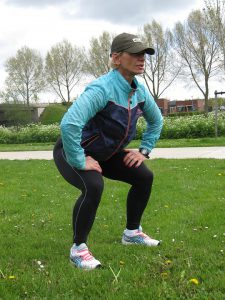 Squats are one of the best exercises you can do in the gym (or at home!). This is because it is one of the few exercises that works multiple areas of your body. This makes it an efficient exercise to make you stronger quicker! However, when done incorrectly, squatting can cause a lot of issues to your knees. Improper technique results in imbalanced pressures around your knee cap, which will accelerate wear and tear.
 The exact cause of wry neck is not known however with diagnostic imaging intervertebral discs (which initially were thought to be the cause) have been ruled out. It is thought that one or more facet joints in the neck is the cause of the symptoms. These joints being put under stress in certain sleeping positions or neck positions. It is as if these joints become “locked”.